

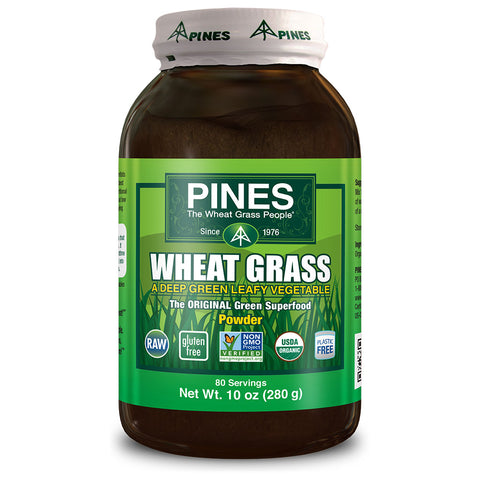
When you open a bottle of Pines Wheat Grass for the first time, one of the first things you notice is the color. The powder is a deep, vibrant green—almost shockingly rich compared to other green powders you may have seen. That color is not an accident, and it is not the result of added dyes or flavorings. It is the natural result of chlorophyll that has been protected from oxidation from the moment the wheatgrass was harvested until the moment you open the bottle.
Packaging matters. It is not just about branding or shelf appeal. The type of container a product is stored in directly determines whether the nutrients inside survive long enough to benefit you. Chlorophyll, vitamins, and enzymes are fragile compounds that degrade rapidly when exposed to oxygen and light. Once that degradation begins, it cannot be reversed. A product that was nutrient-dense at harvest can become nutritionally depleted by the time it reaches your kitchen—and the most obvious sign of that loss is color.
If you have ever compared green powders side by side, you have probably noticed significant differences in color. Some are bright and vibrant. Others are pale, dull, or even grayish. That difference is not cosmetic. It is chemical. The richer the green, the more intact the chlorophyll and associated nutrients. The paler the green, the more oxidation has occurred.
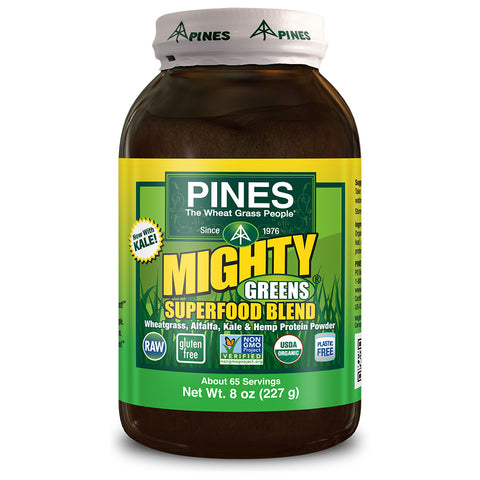
Pines has used oxygen-free amber glass bottles with special metal caps since the 1970s, following the same packaging standards that Dr. Charles Schnabel developed for Cerophyl in 1937. Those standards were not chosen for marketing reasons. They were chosen because they work. Oxygen-free glass prevents oxidation better than any other packaging method, and nearly ninety years of evidence proves it.
What Oxidation Does to Green Foods
Oxidation is a chemical reaction that occurs when oxygen interacts with organic compounds. In the context of green vegetables, oxidation breaks down chlorophyll, degrades vitamins, and destroys enzymes. The result is a product that looks paler, tastes less fresh, and delivers fewer nutrients.
Chlorophyll is the green pigment in plants that allows them to convert sunlight into energy through photosynthesis. It is also one of the most nutritionally valuable compounds in dark green vegetables. Structurally, chlorophyll is very similar to hemoglobin, the molecule in red blood cells that carries oxygen, and research dating back to the 1930s has shown that chlorophyll supports blood health and helps the body eliminate toxins.
But chlorophyll is highly sensitive to oxidation. When exposed to oxygen and light, the magnesium atom at the center of the chlorophyll molecule is displaced, causing the compound to lose its vibrant green color and much of its biological activity. This degradation happens gradually but inevitably in products that are not properly protected.
Vitamins are also vulnerable to oxidation. Vitamin C, vitamin E, and the B vitamins can all degrade when exposed to oxygen over time. Even if a product starts out nutrient-dense, oxidation steadily reduces its vitamin content during storage.
Enzymes are proteins that help the body digest food and absorb nutrients. Many green foods contain naturally occurring enzymes, but these compounds are fragile and easily denatured by heat, oxygen, and time. Once an enzyme is denatured, it no longer functions.
The combined effect of chlorophyll breakdown, vitamin loss, and enzyme degradation is a product that delivers far less nutrition than it should. And the most reliable way to assess that loss without a laboratory test is simply to look at the color.
Why Most Green Powders Are Packaged Poorly
Walk down the supplement aisle of any health food store, and you will see green powders packaged in plastic tubs, foil packets, and resealable bags. These containers are convenient, lightweight, and cheap to produce. But they are terrible at protecting nutrients.
Plastic tubs are permeable to oxygen. Even when sealed, oxygen slowly migrates through the plastic walls and into the product. Over weeks and months, that steady exposure causes oxidation. The longer the product sits on the shelf or in your pantry, the more nutrients are lost. Some manufacturers try to mitigate this by adding desiccant packets or nitrogen-flushing the containers, but these measures only slow oxidation—they do not stop it.
Foil packets and resealable bags offer slightly better protection than plastic, but they are not airtight. Every time you open the package, oxygen rushes in. The resealable closure is not a vacuum seal, so once the package is opened, oxidation accelerates. Even unopened foil packets can develop tiny leaks or pinholes during shipping and handling, allowing oxygen to seep in long before the consumer ever opens the product.
Clear plastic or clear glass containers expose the product to light, which accelerates chlorophyll breakdown even further. Light acts as a catalyst for oxidation, speeding up the degradation process.
Most companies choose these packaging methods because they are inexpensive and because consumers have been conditioned to accept them. Plastic tubs with bright labels look appealing on store shelves. Foil packets are easy to ship and store. But neither packaging type prioritizes nutrient preservation.
The result is that many green powders on the market are significantly degraded by the time they reach consumers. The pale or dull color is not a minor cosmetic issue—it is evidence that oxidation has already done its damage.
The Science of Oxygen-Free Glass
Pines packages all its products in amber glass bottles with specially designed metal caps that allow oxygen to be vacuumed out before sealing. This creates an oxygen-free environment inside the bottle that prevents oxidation from the moment the product is packaged until the moment you open it.
Amber glass blocks light, which prevents the photochemical reactions that accelerate chlorophyll breakdown. Unlike clear glass or plastic, amber glass filters out the wavelengths of light that are most damaging to nutrients.
Special metal caps create a true vacuum seal. These caps are not the standard screw-on lids you find on most bottles. They are engineered to allow oxygen to be removed from the bottle during the sealing process, and once sealed, they prevent outside air from entering.
Glass is non-permeable. Unlike plastic, glass does not allow oxygen or moisture to migrate through it. Once the oxygen is removed and the bottle is sealed, the product inside is protected as effectively as if it were stored in a laboratory-grade vacuum chamber.
This packaging method was developed by Dr. Charles Schnabel in 1937 for Cerophyl, and it has remained Pines' standard ever since. The reason is simple: the science of oxidation has not changed. Oxygen still degrades chlorophyll. Light still accelerates breakdown. And oxygen-free amber glass still prevents both better than any other packaging method.
The richness of the green color in a vegetable powder is one of the most reliable indicators of its quality. Color reflects chlorophyll content, and chlorophyll content correlates with overall nutrient density.
When you open a bottle of Pines Wheat Grass, the powder is a deep, vibrant green—the same color as fresh wheatgrass juice. That color tells you that the chlorophyll has been preserved, that the vitamins are still intact, and that the product has not suffered significant oxidation.
If you compare Pines to other green powders side by side, the difference is often dramatic. Many products appear pale green, olive green, or even grayish—all signs that oxidation has occurred. Some companies try to mask this by blending their wheatgrass or barley grass with brightly colored ingredients like spirulina, but the underlying color still reveals the truth.
Research on antioxidant values supports this visual test. Studies have shown that the ORAC (Oxygen Radical Absorbance Capacity) value of green vegetables—a measure of their antioxidant activity—correlates closely with their chlorophyll content. The greener the food, the higher its antioxidant value. The paler the food, the lower its protective capacity.
In other words, color is not just about aesthetics. It is a functional indicator of nutrient preservation. A product that has lost its green color has also lost much of its nutritional value.
Dr. Schnabel's 1937 Innovation Still Used Today
In 1937, Dr. Charles Schnabel realized that the wheatgrass he was producing for Cerophyl was losing nutritional value during storage. He observed that products packaged in ordinary containers turned pale and lost their fresh flavor over time. He knew that oxidation was the problem, and he set out to solve it.
Schnabel developed a method to vacuum the oxygen out of amber glass bottles and seal them with specially designed metal caps. This created an oxygen-free environment that preserved the chlorophyll, vitamins, and enzymes in the wheatgrass powder far longer than any other packaging method available at the time.
That innovation became the standard for Cerophyl, and when Pines Wheat Grass launched in 1976, the founders chose to maintain the same packaging standards. Fifty years later, Pines still uses oxygen-free amber glass bottles with the same type of metal caps that Schnabel designed.
The reason Pines has not switched to plastic tubs or foil packets is not stubbornness or tradition. It is because oxygen-free glass still provides the best protection against oxidation. The science that was true in 1937 is still true today. Oxygen still degrades nutrients. Light still accelerates breakdown. And glass still prevents both better than any alternative.
In an industry that often prioritizes cost-cutting and convenience over quality, Pines' commitment to oxygen-free glass is a statement about what the company values: nutrient preservation, not just shelf appeal.
Practical Comparison: Look at the Color
If you want to know whether a green powder has been properly protected, the simplest test is visual. Compare the color of different products side by side.
Take a small amount of Pines Wheat Grass powder and place it in a white bowl or on a white plate. Then do the same with another green powder from a plastic tub or foil packet. The difference in color will likely be obvious. Pines will appear rich, vibrant, and deeply green. The other product may appear pale, dull, or grayish by comparison.
This is not a subjective judgment. It is a chemical reality. The richer the green, the more chlorophyll remains. The paler the green, the more oxidation has occurred.
You can also perform a simple hydration test with tablets. Drop seven Pines tablets into a glass of water and watch them swell to many times their original size as the fiber absorbs liquid. That swelling is evidence that the natural fiber is intact—another sign that the product has been minimally processed and carefully preserved.
Some companies claim that their products are "just as good" as Pines, even though they use inferior packaging. But the color does not lie. If a product has turned pale or dull, oxidation has already taken its toll. No amount of marketing can change the chemistry.
Choose Packaging That Protects What You Are Paying For
When you buy a green superfood, you are not just paying for the raw ingredients. You are paying for the nutrients those ingredients contain—and those nutrients only have value if they survive from the farm to your body.
Packaging is not a minor detail. It is the difference between a product that delivers on its promises and a product that has been degraded before you ever open it. Pines packaging is designed to protect nutrients. Many competitors are designed to minimize manufacturing costs.
The next time you are choosing a green powder, do not just compare price per ounce. Compare color. Compare packaging. Compare the company's commitment to nutrient preservation. And ask yourself: would you rather pay less for a product that has been degraded by oxidation, or pay a little more for a product that has been protected from harvest to consumption?
The color of Pines products is not an accident. It is proof that oxygen-free glass works. It is evidence that the same standards Dr. Schnabel developed in 1937 are still the gold standard today. And it is a reminder that when it comes to nutrient preservation, packaging is not optional—it is essential.
Open a bottle of Pines, look at the rich green color, and you will see the difference that proper packaging makes. That is the color of quality. That is the color of nutrients preserved. That is what oxygen-free glass delivers.



Comments (0)
There are no comments for this article. Be the first one to leave a message!