

If you have paid any attention to wellness trends over the past few years, you have heard about gut health. Probiotic supplements line store shelves. Kombucha and yogurt brands tout their live cultures. Functional medicine practitioners talk about the microbiome as the foundation of immune function, mental health, and even disease prevention. All of that attention is justified—gut health really is central to overall health.
But there is a critical piece of the gut health conversation that often gets overlooked: prebiotics. Most people focus on adding beneficial bacteria through probiotics and fermented foods, but those bacteria cannot thrive without the right fuel. That fuel is fiber—specifically, the kind of fiber found in whole plant foods. Without it, even the best probiotics struggle to survive and multiply in your digestive tract.
This is where juice cleanses fail. No matter how many greens go into a juice, if the fiber has been removed, the juice is not prebiotic. It cannot properly feed the beneficial bacteria in your gut. It moves too quickly through the digestive system to support the mucosal lining of the intestines. And over time, relying on fiber-free juices instead of whole foods can actually harm your gut health rather than help it.
If you want to support your gut this spring, the answer is not another juice cleanse. It is adding more fiber-rich whole foods—especially dark green vegetables that provide both prebiotic fiber and the nutrients your gut lining needs to stay healthy.
Prebiotics vs. Probiotics: What They Are and Why You Need Both
The terms "prebiotic" and "probiotic" are often used interchangeably, but they refer to different things—and both are essential for gut health.
Probiotics are live beneficial bacteria that colonize your digestive tract. They help break down food, produce certain vitamins (like vitamin K and some B vitamins), protect against harmful pathogens, and communicate with your immune system. Probiotics are found in fermented foods like yogurt, kefir, sauerkraut, kimchi, and kombucha, as well as in supplement form.
Prebiotics are types of dietary fiber that the human body cannot digest, but that beneficial gut bacteria can ferment and use as food. When you eat prebiotic fiber, it travels to your colon largely intact, where it feeds probiotic bacteria and helps them thrive. Prebiotics are found in whole plant foods—vegetables, fruits, legumes, whole grains, nuts, and seeds.
The relationship between prebiotics and probiotics is not optional; it is foundational. You can take the highest-quality probiotic supplements available, but if your diet does not include adequate prebiotic fiber, those bacteria will not have the environment they need to survive and multiply. It is like planting seeds in soil without water or nutrients—the seeds may sprout briefly, but they will not establish strong roots.
Fiber also plays a direct role in colon health beyond feeding bacteria. It creates bulk in the stool, which stimulates peristalsis—the wave-like muscle contractions that move waste through the intestines. It binds to bile acids and toxins and carries them out of the body. And it supports the production of short-chain fatty acids, which nourish the cells lining the colon and reduce inflammation.
From this perspective, prebiotics are not just helpful—they are the foundation of gut health. Probiotics are important, but they are secondary to the fiber that makes a healthy gut environment possible in the first place.
Why Juice Cleanses Fail the Gut Microbiome
Juice cleanses are marketed as a way to "reset" digestion, flood the body with nutrients, and give the gut a break. But from a microbiome standpoint, they do the opposite. By removing fiber, juices eliminate the one thing gut bacteria need most.
When fruits and vegetables are juiced, the liquid passes through a fine mesh or centrifuge that separates the juice from the pulp. That pulp is where nearly all the fiber lives. What remains is a nutrient-rich liquid that contains vitamins, minerals, and plant compounds—but no structural material for the digestive system to work with.
Without fiber, juice moves through the digestive tract too quickly. It does not create the bulk needed to stimulate regular bowel movements. It does not feed the beneficial bacteria in the colon. And it does not support the mucosal layer that protects the gut lining from inflammation and damage.
Research by Dr. Eric Martens at the University of Michigan Medical School found that when gut bacteria do not receive adequate fiber from the diet, they begin to consume the protective mucus layer lining the intestines. That mucus layer is essential for preventing harmful bacteria and undigested food particles from crossing into the bloodstream—a condition often referred to as "leaky gut." Over time, a compromised gut lining can contribute to chronic inflammation, food sensitivities, and immune dysfunction.
Juice cleanses can also cause blood sugar instability. Even green juices made primarily from vegetables contain natural sugars, and without fiber to slow absorption, those sugars enter the bloodstream rapidly. That can lead to energy crashes, increased hunger, and cravings—hardly the "light and clean" feeling that juice cleanses promise.
Some people report feeling energized during the first day or two of a juice cleanse, but that is often due to a temporary reduction in calorie and sodium intake, not because juice is inherently beneficial. By day three or four, fatigue, irritability, and digestive upset are common—signs that the body is being deprived of the calories, protein, and fiber it needs to function normally.
The idea that juice cleanses give your digestive system a "rest" is also misleading. Your digestive system is designed to digest food. It does not need a break from whole vegetables, whole grains, or whole fruits. What it struggles with is highly processed, low-fiber diets—and the solution is not to remove food; it is to choose better food consistently.
A healthy gut microbiome is not built in three days, and it is not maintained through periodic cleanses. It is the result of daily habits that provide the fiber, diversity, and nutrients beneficial bacteria need to thrive.
Consistent fiber intake is the single most important factor. The average American eats only about fifteen grams of fiber per day, far below the recommended twenty-five to thirty-five grams. That fiber gap shows up as digestive issues, irregular bowel movements, and a less diverse gut microbiome. Increasing fiber intake from whole plant foods—vegetables, fruits, legumes, whole grains, nuts, and seeds—directly supports gut health.
Diversity of plant foods matters. Different types of fiber feed different strains of bacteria, so eating a wide variety of plant foods creates a more diverse and resilient microbiome. A diet that includes dark greens, cruciferous vegetables, root vegetables, berries, beans, oats, and nuts will support a healthier gut than a diet limited to just a few plant foods.
Hydration supports digestion and helps fiber do its job. Without adequate water, fiber can become constipating rather than beneficial. Aim for at least eight glasses of water a day, more if you are active or live in a dry climate.
Time and consistency are essential. You cannot undo months of poor eating habits with a three-day cleanse, and you cannot build a healthy microbiome overnight. Gut health improves gradually as you provide consistent fiber, nutrients, and diversity over weeks and months.
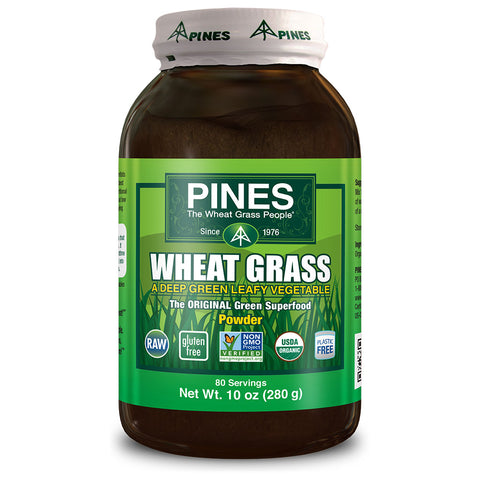
If you are not regularly eating enough vegetables, a concentrated source of whole-food greens can help bridge that gap. Pines Wheat Grass provides approximately the same nutrition as a serving of dark leafy greens in just seven tablets or a rounded teaspoon of powder. Because it is a whole food—not juice—it includes the natural fiber that makes it prebiotic. When you add a Pines tablet to water, it swells to many times its original size as the fiber absorbs liquid. That visual is a clear demonstration of the bulk and prebiotic effect that fiber creates in your colon.
The Role of Whole-Food Wheatgrass in Gut Health
Wheatgrass grown outdoors through cold weather and harvested at the jointing stage of growth is one of the most nutrient-dense vegetables available. It provides chlorophyll, vitamins, minerals, antioxidants, and—critically—natural prebiotic fiber.
Prebiotic fiber in wheatgrass supports the growth of beneficial bacteria like Lactobacillus and Bifidobacterium, which are essential for healthy digestion, nutrient absorption, and immune function. Studies have shown that these bacteria thrive when the diet includes adequate insoluble fiber from whole vegetables. In fact, university laboratories used to order Cerophyl powder (the precursor to Pines Wheat Grass) specifically as a growing medium for probiotic cultures because its high fiber and nutrient content made it ideal for supporting bacterial growth.
Chlorophyll has been studied since the 1930s for its role in supporting blood health and detoxification. Chlorophyll is structurally similar to hemoglobin, the molecule in red blood cells that carries oxygen, and research has shown that chlorophyll can support red blood cell production and help the body eliminate certain toxins more efficiently. Wheatgrass contains some of the highest concentrations of chlorophyll found in any vegetable, which is why it has such a deep green color.
Vitamins and minerals in wheatgrass—including magnesium, folate, vitamin K, vitamin C, and iron—support the cells lining the gut, help maintain the mucosal barrier, and fuel the enzymes involved in digestion and detoxification.
When you consume wheatgrass as a whole-food powder or tablet, you get all of these benefits together in the natural context of a dark green vegetable. Contrast that with wheatgrass juice, which removes the fiber and delivers nutrients in isolation. Juice may provide a temporary nutrient boost, but it cannot support the long-term health of your gut microbiome the way whole-food wheatgrass can.
Practical Spring Gut Reset: Fiber First
If you want to improve your gut health this spring, focus on the habits that actually work with your biology.
Add a daily serving of whole-food greens. If fresh greens are not realistic every day, keep Pines Wheat Grass on hand. A rounded teaspoon of powder in a smoothie or seven tablets with water provides concentrated dark green vegetable nutrition with prebiotic fiber intact.
Increase vegetable variety. Aim to eat a wide range of plant foods throughout the week—dark greens, cruciferous vegetables, root vegetables, legumes, whole grains, berries, nuts, and seeds. The more diversity, the healthier your microbiome.
Stay hydrated. Fiber works best when paired with adequate water. Drink at least eight glasses a day to keep digestion moving smoothly.
Prioritize whole foods over juices. If you enjoy green smoothies, that is great—blend whole vegetables and fruits so the fiber stays intact. If you prefer convenience, choose whole-food powders over juice-based products.
Be patient. Gut health improves gradually. You will not see results overnight, but after a few weeks of consistent fiber intake, you will likely notice better digestion, more regular elimination, and increased energy.
Skip the extreme cleanses. A three-day juice fast is not a gut health strategy. Daily fiber-rich whole foods are.
Spring is a natural time to focus on renewal, but real renewal does not come from deprivation. It comes from giving your body what it actually needs: fiber, nutrients, hydration, and consistency.
Your gut bacteria are not asking for a cleanse. They are asking for fiber. Feed them well, and they will take care of the rest.



Comments (0)
There are no comments for this article. Be the first one to leave a message!