

Spring has always been associated with renewal. The earth wakes up, plants push through soil, and many of us feel an instinct to "clean house" in our own bodies. That instinct is healthy—but the way it gets marketed often is not. Every March, wellness influencers promote juice cleanses, detox teas, and extreme protocols that promise to flush toxins, reset digestion, and leave you feeling lighter and more energized.
The problem is that most of these programs misunderstand what detoxification actually is and how your body accomplishes it. Your liver, kidneys, colon, lymphatic system, and skin work around the clock to process and eliminate waste—and they do not need a three-day juice fast to do their job. What they do need is consistent support from fiber-rich whole foods, adequate hydration, and nutrients that help those systems function optimally.
If you want a true spring reset, the answer is not eliminating food. It is adding more of the right foods—especially dark green vegetables rich in chlorophyll, fiber, and the minerals that support your body's natural elimination pathways.
How Your Body Actually Detoxifies
"Detox" has become a buzzword, but physiologically, it refers to a set of processes your body performs constantly. These processes do not start when you drink a green juice or take a supplement—they are happening right now, whether you are awake or asleep.
The liver is your primary detoxification organ. It filters blood coming from the digestive tract, neutralizes harmful substances, and converts fat-soluble toxins into water-soluble compounds that can be excreted through urine or bile. The liver depends on a steady supply of nutrients—B vitamins, antioxidants, sulfur-containing amino acids—to carry out these chemical reactions efficiently.
The kidneys filter waste from the blood and excrete it through urine. They regulate fluid balance, electrolytes, and pH levels in the body. Proper kidney function depends on adequate hydration and a diet that does not overload the system with excess sodium, sugar, or processed ingredients.
The colon is where waste moves out of the body. It also houses trillions of beneficial bacteria that help break down food, produce certain vitamins, and protect against harmful pathogens. For the colon to function well, it needs bulk—physical material that stimulates peristalsis (the wave-like contractions that move waste along). That bulk comes from dietary fiber.
The lymphatic system moves fluid and immune cells throughout the body, collecting waste and pathogens along the way. Unlike the circulatory system, the lymphatic system does not have a pump; it relies on muscle movement, deep breathing, and hydration to keep fluid moving.
The skin is often overlooked as a detox organ, but it eliminates waste through sweat and produces oils that protect against environmental toxins. Healthy skin function depends on adequate hydration, antioxidants, and fat-soluble vitamins like vitamin A and E.
All of these systems work together, and all of them depend on whole foods to work well. Stripping away fiber, as most juice cleanses do, disrupts one of the most important elimination pathways: the colon.
Juice cleanses have become synonymous with "detox," but from a physiological standpoint, they often work against the body's natural systems rather than supporting them.
When fruits and vegetables are juiced, the pulp—which contains nearly all the fiber—is removed. What remains is a liquid that is rich in vitamins, minerals, and natural sugars but lacks the structural component that the digestive system needs to function properly. Without fiber, juice passes through the digestive tract too quickly to support the growth of beneficial probiotic bacteria. It does not create the bulk needed to stimulate regular bowel movements. And it does not bind to toxins in the intestines to carry them out of the body.
Research on gut health has shown that fiber is essential for maintaining the mucosal layer that lines the intestines and protects against inflammation. Dr. Eric Martens, a professor of microbiology and immunology at the University of Michigan Medical School, found that without adequate fiber, gut bacteria can begin to consume the protective mucus layer itself, leading to increased intestinal permeability and inflammation. Juices, no matter how nutrient-dense, do not provide that fiber.
Juice cleanses can also cause blood sugar instability. Even vegetable juices contain natural sugars, and without fiber to slow absorption, those sugars enter the bloodstream rapidly. That can lead to energy crashes, mood swings, and increased hunger—hardly the "light and refreshed" feeling that cleanse programs promise.
For some people, extreme juice-only protocols can also trigger fatigue, headaches, and digestive upset. These symptoms are often framed as "detox reactions," but they are more accurately signs that the body is being deprived of the calories, protein, and fiber it needs to function normally.
The idea that you need to eliminate solid food to "give your digestive system a break" is not supported by science. Your digestive system is designed to digest food. What it struggles with is highly processed, low-fiber diets—and the solution to that problem is not removing food altogether; it is choosing better food consistently.
What Spring Cleaning Really Looks Like
A true spring reset is not a three-day event. It is a return to basics: whole foods, adequate hydration, consistent fiber intake, and daily movement. These habits do not generate dramatic "before and after" photos, but they create long-term results that short-term cleanses never will.
Fiber-rich foods are the foundation. Fiber creates the bulk that stimulates regular bowel movements and supports a healthy gut microbiome. It binds to bile acids and toxins in the intestines and carries them out of the body. It slows the absorption of sugar and helps regulate blood cholesterol. And it feeds the beneficial bacteria in your colon, which produce short-chain fatty acids that reduce inflammation and support immune function.
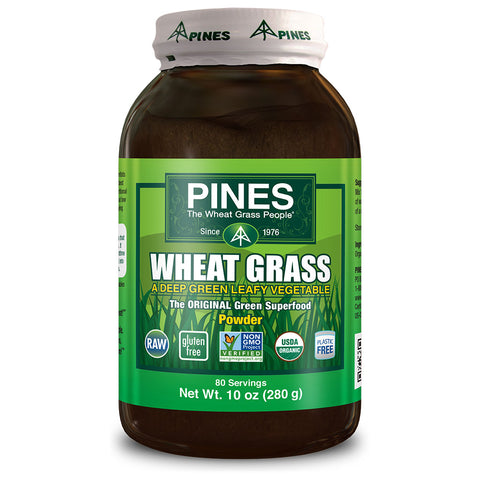
Dark green vegetables are some of the best sources of fiber, along with whole grains, legumes, nuts, seeds, and fruits. If you are not regularly eating these foods, adding a concentrated source of greens—like Pines Wheat Grass—can help fill that gap. A rounded teaspoon of powder or seven tablets provides approximately the same nutrition as a serving of spinach or kale, including the natural fiber that juices lack.
Chlorophyll-rich foods support blood health and liver function. Chlorophyll is the green pigment in plants that allows them to convert sunlight into energy. Structurally, chlorophyll is very similar to hemoglobin, the molecule in red blood cells that carries oxygen. Research dating back to the 1930s has shown that chlorophyll can support red blood cell production and help the body eliminate certain toxins more efficiently.
Wheatgrass grown outdoors through cold weather at the jointing stage of growth contains some of the highest concentrations of chlorophyll found in any vegetable. That deep green color is a direct indicator of nutrient density. When you open a bottle of Pines Wheat Grass, the vibrant green powder is evidence that chlorophyll and related phytonutrients have been preserved through careful drying and oxygen-free glass packaging.
Hydration supports every elimination pathway. Water helps the kidneys filter waste, keeps the lymphatic system moving, and supports healthy skin function. If you are not drinking enough water, no amount of green juice or supplements will compensate.
Whole foods over extremes. Rather than cycling between restrictive cleanses and normal eating, the most effective approach is to build a baseline of consistent whole-food habits. That means prioritizing vegetables, fruits, whole grains, legumes, nuts, and seeds; minimizing processed foods; and making daily greens a non-negotiable part of your routine.
The Role of Dark Green Vegetables in Supporting Detox
Dark green leafy vegetables—spinach, kale, collards, chard, and cereal grasses like wheatgrass—are among the most nutrient-dense foods available. They provide fiber, chlorophyll, magnesium, folate, vitamin K, vitamin C, and a wide array of antioxidants and phytonutrients that support the body's detoxification pathways.
Magnesium is involved in more than three hundred enzymatic reactions in the body, including those that support liver detoxification. Many people do not get enough magnesium from their diets, and dark greens are one of the best sources.
Folate supports methylation, a biochemical process that helps the liver neutralize toxins. Folate is also essential for DNA repair and red blood cell production.
Vitamin K plays a role in blood clotting and bone health, and emerging research suggests it may also support healthy inflammatory responses.
Antioxidants in dark greens—including carotenoids, flavonoids, and polyphenols—protect cells from oxidative stress and support healthy immune function.
When these nutrients are consumed as part of a whole food rather than isolated in a supplement, they work synergistically. The fiber carries toxins out of the body. The chlorophyll supports blood health. The minerals and vitamins fuel the liver and kidneys. The phytonutrients protect against cellular damage.
That is why a daily serving of dark green vegetables is one of the most powerful things you can do to support your body's natural detoxification systems—not just in spring, but year-round.
Practical Spring Reset: No Extremes Required
If you want to support your body's natural detox systems this spring, you do not need a complicated protocol. You need consistent habits that work with your biology, not against it.
Add a daily serving of dark greens. If fresh greens are not realistic every day, keep a bottle of Pines Wheat Grass on hand. A rounded teaspoon of powder in water or a smoothie, or seven tablets with a glass of water, provides the concentrated nutrition of a full serving of dark leafy greens—including the fiber that makes it prebiotic.
Drink more water. Aim for at least eight glasses a day, more if you are active or live in a dry climate. Hydration supports kidney function, lymphatic flow, and healthy skin.
Move your body daily. Walking, stretching, yoga, and strength training all support lymphatic drainage and help your body eliminate waste more efficiently.
Prioritize whole foods. Focus on vegetables, fruits, whole grains, legumes, nuts, and seeds. Minimize processed foods, added sugars, and excessive sodium.
Get enough sleep. Your body does much of its repair and detoxification work while you sleep. Aim for seven to nine hours per night.
Be consistent, not extreme. A three-day cleanse followed by two weeks of poor eating habits is far less effective than daily greens, hydration, and whole foods maintained over months and years.
Spring is a natural time to reflect on your habits and make adjustments. But rather than falling for the marketing hype around extreme cleanses, choose the approach that actually supports your body's built-in detoxification systems: fiber-rich whole foods, adequate hydration, and daily greens.
That is the kind of spring reset that lasts.



Comments (0)
There are no comments for this article. Be the first one to leave a message!