

If you could walk into an American pharmacy in 1939, you would find something surprising on the shelf: Cerophyl, a "multivitamin" made from dehydrated cereal grass grown in Kansas. Twenty tablets a day provided the minimum daily requirement of all known vitamins. No synthetic ingredients. No lab-created isolates. Just dark green wheatgrass, harvested at peak nutrition, dried carefully, and bottled in amber glass.
For many years, Cerophyl was trusted by doctors, prescribed in hospitals, and used in medical studies focused on blood health, toxicity, and nutrient deficiency. Then synthetic vitamins arrived, and everything changed. One-A-Day pills promised the same vitamins in a single tablet instead of twenty. Cerophyl quietly faded from view—but the science behind it never stopped being valid.
In 1976, two friends discovered those old Cerophyl files and saw an opportunity not to compete with synthetic vitamins, but to reintroduce cereal grass for what it had always been: a nutrient-dense, fiber-rich, whole dark green vegetable. That pivot launched Pines Wheat Grass and started a fifty-year journey that continues today.
The Cerophyl Era: When Wheatgrass Was the World's First Multivitamin
The story begins in the 1930s with Dr. Charles Schnabel, an agricultural chemist working in Kansas. Schnabel's early experiments with farm animals revealed something remarkable: when he added a small amount of dried cereal grass to chicken feed, egg production nearly tripled. Similar results appeared in dairy cattle—richer milk, better weight gain, healthier offspring. The effect was consistent across different cereal grasses: wheatgrass, barley grass, oatgrass, and ryegrass all produced similar benefits when harvested at the right stage of growth.
Schnabel soon realized that timing was everything. By testing cereal grasses at different points in their growth cycle, he discovered that chlorophyll, protein, and most vitamins peaked during a brief window in early spring called the jointing stage. Before jointing, nutrient levels climbed steadily as the plant matured. After jointing, levels dropped sharply as the plant shifted energy toward forming grain. That narrow window—just a few days each year—became the foundation of Schnabel's entire approach.
The 1930s and 1940s were an exciting time for nutritional science. New vitamins were being discovered regularly, and each time a vitamin was identified, Schnabel tested his cereal grass and found it present in higher concentrations than most other leafy greens. The media followed vitamin discoveries closely, and public interest in natural sources of vitamins was strong. Cerophyl rode that wave.
By the late 1930s, Cerophyl tablets were sold in nearly every pharmacy in the United States. Doctors prescribed them. Hospitals used them in research. Medical journals published studies documenting results in conditions related to blood health, anemia, and maternal nutrition. Cerophyl was not marketed as a cure for anything specific, but as a concentrated food that delivered a broad spectrum of nutrients in a convenient, economical form.
The label read: "Cerophyl contains one or more of the following cereal grasses: wheat, barley, rye, and oats." The formulation could vary, but it was primarily wheatgrass grown outdoors in glacial Kansas soil, slowly through cold weather, and harvested once a year at jointing stage. The dried grass was milled into powder, pressed into tablets, and packaged in oxygen-free amber glass bottles with special metal caps designed to protect against oxidation.
For people who felt the results—more energy, better digestion, clearer skin—Cerophyl became a daily ritual. It was whole-food nutrition long before that phrase became a marketing term.
Synthetic Vitamins and the Decline of Whole-Food Multivitamins
The turning point came in the late 1940s and 1950s with the rise of synthetic vitamin technology. Scientists learned how to isolate individual vitamins and manufacture them in laboratories. The resulting pills were smaller, cheaper to produce, and required far less effort from consumers. One-A-Day vitamins delivered the same minimum daily requirements as twenty Cerophyl tablets—and in an era that celebrated "modern science," synthetic felt like progress.
From a convenience standpoint, the appeal was obvious. From a nutritional standpoint, however, something important was lost. Cerophyl was not just a collection of isolated vitamins; it was a whole food that included fiber, chlorophyll, trace minerals, and hundreds of other plant compounds that worked together. It supported digestion, provided prebiotic fiber for gut bacteria, and delivered nutrients in the natural context of a dark green vegetable.
But the marketplace did not care about those distinctions in the 1950s. Consumers wanted simplicity, and synthetic vitamins delivered it. Cerophyl sales declined steadily. The company tried to adapt by creating a fortified product called Viet, which combined dehydrated cereal grass with synthetic vitamins in a smaller serving size—four tablets instead of twenty. It did not work. Viet never gained traction, and Cerophyl continued its slow fade into obscurity.
By the early 1970s, only a few hundred loyal customers remained, mostly older adults who had taken Cerophyl for decades and noticed a difference when they stopped. The company kept a small inventory of frozen wheatgrass powder in cold storage and produced bottles as needed. A few university laboratories still ordered Cerophyl powder for use as a growing medium for probiotics, including various strains of Lactobacillus. The high nutrient content and natural fiber made it an ideal substrate for beneficial bacteria—a hint of what would later be understood as prebiotic function.
Cerophyl was not dead, but it was dormant, waiting for a shift in cultural understanding about food, health, and the limitations of reductionist approaches to nutrition.
1975: Two Friends Discover the Cerophyl Files
In 1975, Ron Seibold was working in a Kansas office that happened to store the remaining Cerophyl files, inventory, and customer lists. Out of curiosity, he began reading the old research reports and medical studies. He was struck by the volume of evidence: decades of published research, hospital studies, and testimonial letters from people who credited Cerophyl with improving their health.
Ron decided to try the product himself. Within days, he noticed a difference—more energy, better digestion, clearer skin. He grew up on a Kansas farm and already knew from experience that cattle grazed on wheatgrass in early spring showed dramatic improvements in health and milk production. The research confirmed what farmers in his region had observed for generations.
Around the same time, a book called The Save Your Life Diet by Dr. David Reuben was gaining popularity. Reuben's message was simple but powerful: people in cultures that ate diets rich in whole foods—vegetables, fruits, nuts, grains—had far lower rates of heart disease, cancer, and other degenerative diseases than people in Western societies who relied on processed foods and synthetic supplements. The key, Reuben argued, was fiber. Without fiber, even nutrient-rich foods could not properly support gut health and long-term wellness.
That insight changed everything for Ron. He realized that Cerophyl's greatest strength was not its vitamin content alone, but the fact that it was a whole food. It contained the natural fiber that juices and synthetic vitamins lacked. It was prebiotic, supporting the growth of beneficial gut bacteria. It was exactly what Reuben was calling for—and it had been hiding in plain sight for decades.
Ron met Steve Malone, a lifelong resident of Hays, Kansas, later that year. The two men shared a vision: bring Cerophyl back, but reposition it for a new generation. Instead of marketing it as a multivitamin competing with synthetic pills, they would present it as what it truly was—a convenient, economical, nutrient-dense dark green vegetable. They would follow Dr. Schnabel's standards for growing, harvesting, and packaging, but they would give it a new name and a new message aligned with the emerging natural foods movement.
In 1976, they launched Pines Wheat Grass.
The 1976 Pivot: From Vitamin to Vegetable
The decision to move away from the "multivitamin" label was deliberate. By 1976, synthetic vitamins dominated that market, and competing on those terms would have been futile. But there was another, deeper reason: positioning cereal grass as a vitamin undersold its value. A vitamin is something you take to avoid deficiency. A vegetable is something you eat because it is foundational to health.
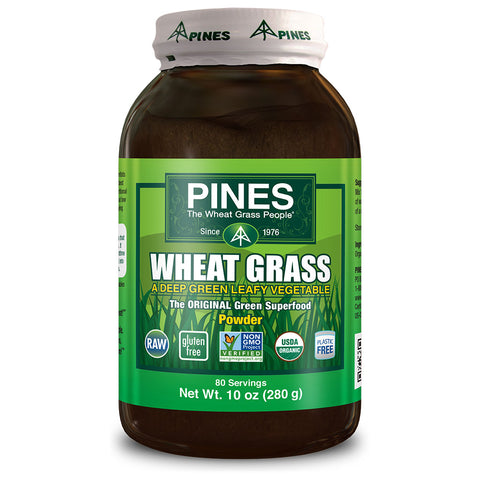
Pines Wheat Grass was introduced as a whole-food, fiber-rich green vegetable that could be added to water, smoothies, or taken in tablet form. Seven tablets or a rounded teaspoon of powder provided approximately the same nutrition as a serving of spinach or kale—but in a much more concentrated, shelf-stable form. Because it was dried at low temperatures and packaged in oxygen-free amber glass bottles, it retained the rich green color and nutrient density that oxidation typically destroys in poorly packaged products.
The message was clear: this is not a shortcut or a synthetic substitute. This is real food, grown the way nature intended, harvested at peak nutrition, and preserved with care.
To fund the new company, Ron and Steve brought together more than one hundred investors, most of whom contributed just a few hundred dollars each. These investors were motivated less by profit than by values—organic farming, sustainable communities, hunger relief, and environmental protection. They chose the name "Pines" in honor of the pine tree, an international symbol of peace in nature. The message was embedded in the brand from day one: this was not just a product; it was a movement.
Steve and Ron hit the road with their bottles of Pines Wheat Grass, visiting health food stores across the country. They slept in campgrounds, showered at rest stops, and spent their days educating store owners about the difference between field-grown wheatgrass and the pale, tray-grown versions that were starting to appear in juice bars. Their pitch was simple: "Eat more dark green vegetables. Here is an easy, affordable way to do it every day."
Their first major break came at Vitamin Cottage in Lakewood, Colorado. The owner, Margaret Isley, bought twenty-four bottles and gave them valuable advice about the natural foods industry. Inspired by her support, Ron and Steve continued store by store across thirty-five states. By the end of 1977, more than two thousand stores carried Pines Wheat Grass. It was the first product in what would eventually become the "green superfood" category in natural food stores.
What Has Not Changed in Fifty Years
While the wellness industry has evolved dramatically since 1976, Pines has maintained the same core standards that Dr. Schnabel established in the 1930s.
Same farm, same region. Pines still grows its wheatgrass in the glacial-soil region of northeastern Kansas where Schnabel conducted his original research. Those soils, formed from ancient loess deposits left by the last glacier, are naturally rich in minerals and provide the foundation for nutrient-dense cereal grass.
Same growing rhythm. Wheatgrass is planted in the fall and grows slowly through cold weather for nearly two hundred days. Roots reach deep into the soil, and the plants stay short but develop into very dark green, chlorophyll-rich cereal grass. Harvest happens once a year, during the brief jointing-stage window in early spring when nutrient density peaks.
Same whole-food philosophy. Pines produces wheatgrass as a whole-food dried vegetable, not as juice. Keeping the natural fiber makes it prebiotic, supporting a healthy gut environment in ways that fiber-free juices cannot.
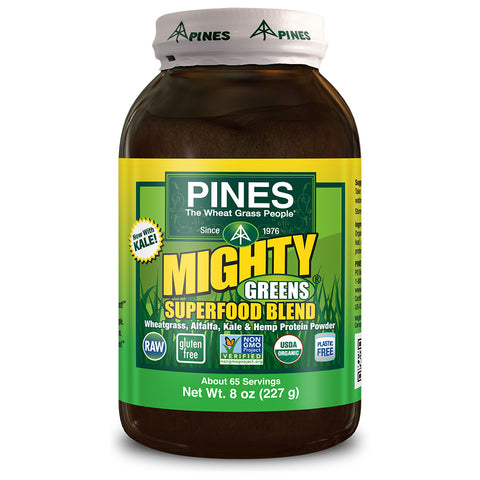
Same glass-first packaging. While many brands moved to plastic tubs and foil packets, Pines continues to use oxygen-free amber glass bottles with special metal caps to minimize oxidation. The rich green color you see when you open a bottle is a direct result of that protection.
The standards have held because the science behind them has held. Nutrient density still peaks at jointing stage. Fiber still matters for gut health. Oxidation still degrades chlorophyll and vitamins. The methods that made Cerophyl effective in 1939 are the same methods that make Pines effective today.
From Forgotten to Foundational: Cerophyl's Legacy Lives On
Cerophyl may have faded from pharmacy shelves, but its influence never disappeared. The research conducted with Cerophyl in the 1930s and 1940s became the foundation for modern understanding of cereal grass nutrition. The growing and harvesting standards developed by Schnabel became the blueprint that Pines still follows. The decision to package in oxygen-free glass became the quality benchmark that separates serious producers from those focused only on cost and convenience.
In 2012, Pines International obtained the Cerophyl trademark and dedicated a sign at Dr. Schnabel's original laboratory, which the company still uses today. Schnabel's daughter, Emily Schnabel Sloan, attended the dedication.
The 1976 pivot from Cerophyl to Pines was not an abandonment of the past—it was a translation. The product remained the same. The farming practices remained the same. The packaging remained the same. What changed was the message: instead of competing in a crowded vitamin market, Pines positioned cereal grass as what it had always been at its biological core—a concentrated, nutrient-dense dark green vegetable that fits into modern life.
That shift allowed Pines to become the original green superfood brand in the natural foods market and to maintain that position for fifty years. It inspired dozens of competitors, many of whom adopted Pines' language and positioning even as they cut corners on quality. It introduced millions of people to the concept that whole-food nutrition, not synthetic shortcuts, is the foundation of long-term health.
The story of Cerophyl and Pines is not just a brand story—it is a reminder that some truths do not go out of style. Whole foods are better than isolated nutrients. Fiber matters. Quality farming practices matter. Thoughtful preservation matters. These principles were true in 1939, and they remain true today.
Cerophyl may be a footnote in history, but the science and values behind it are alive and well in every bottle of Pines.



Comments (1)
I loved reading this history. I have a bottle of Pines Alfalfa powder that I’ve been inconsistent about using. After reading this, I am going to take my rounded teaspoon every day, maybe even twice a day. So inspired by this article, thank you for writing it. I’ve tried other green superfood powders in the past, and gave up on them because of the insane cost of these products and also questioned the value of 50 ingredients (or however many) on the labels. I had suspected that little specks of all these ingredients add up to a big fat nutritional zero.
I used Pines in the 1990’s, then forgot about it. Now I want to use it daily as I’m in my “golden years”. I take few supplements—mainly liquid herbal extracts—and now I’ll be using Pines, rotating between the various grass powders.