

Walk through any supplement aisle and you will see the word "superfood" everywhere. It appears on bright tubs, trendy blends, and long ingredient lists that promise everything at once. But the label alone does not tell you whether a product is truly nutrient-dense. If a company cannot explain how its greens are grown, when they are harvested, and why they are packaged a certain way, "superfood" is often just a marketing word.
Not All Greens Powders Are Equal
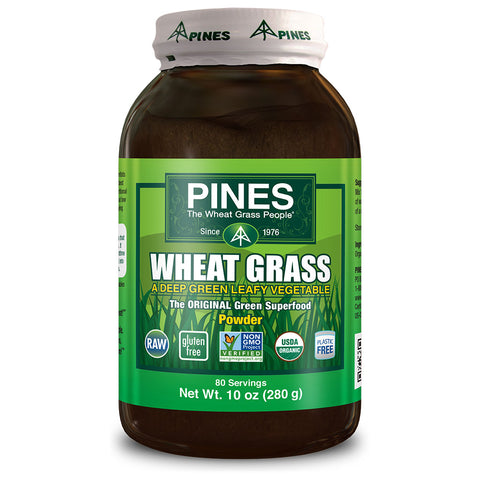
Pines uses the term differently. For decades, the company has used "green superfood" to describe wheatgrass and other cereal grasses grown for maximum nutritional density, harvested at the precise point when chlorophyll, vitamins, and other plant compounds peak, and protected in oxygen-free amber glass. That is a very different standard from a generic blend filled with low-cost ingredients added to make a label look more exciting.
"More ingredients" does not automatically mean more nutrition
A true green superfood starts with concentration. Most vegetables are healthy, but not all of them are naturally concentrated enough to deliver substantial nutrition in a small serving. That was the original insight behind cereal grass research. When wheatgrass or barley grass is grown slowly, outdoors, and harvested at the jointing stage, it becomes a deeply green, nutrient-dense food. That short harvest window matters because nutrient levels rise to a peak and then fall sharply once the plant shifts toward making grain.
Many blends rely on low-cost filler ingredients
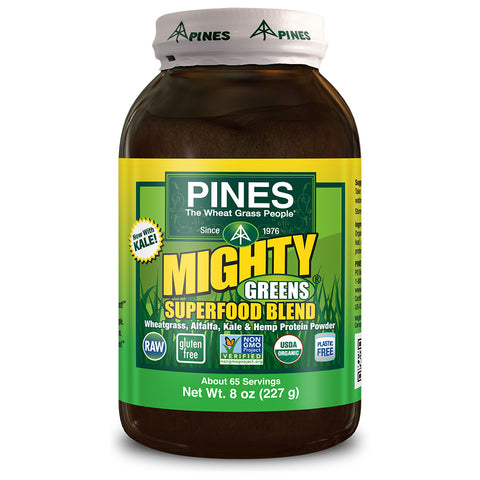
That is one reason many greens blends can be misleading. They often contain a little bit of many things instead of a meaningful amount of the most nutrient-dense ones. Ingredients such as common fruits and vegetables may sound appealing on the label, but they are often included because they are inexpensive and familiar, not because they match the concentration of properly grown cereal grass. In many cases, you need a much larger serving to get nutrition comparable to a small serving of pure cereal grass.
Single-ingredient products may seem less flashy, but they are often easier to trust. You know exactly what you are getting. There is no hiding behind a proprietary blend or a crowded ingredient panel. With Pines, the product is built around one clear idea: grow the plant correctly, harvest it at the right moment, dry it carefully, and protect it from oxidation. The simpler the formula, the easier it is to judge whether the company is delivering real quality.
Packaging matters too. A product can begin with excellent raw material and still lose value if it is exposed to oxygen, moisture, and light. Pines packages its greens in oxygen-free amber glass bottles with special metal caps because chlorophyll and other fragile compounds degrade over time when they are not protected. That is part of what makes a green superfood truly "super"—not just what goes into the bottle, but what still survives by the time you open it.
Read the label. Know the standard.
If you want to judge a greens powder more intelligently, start with a few basic questions. Is the ingredient list built around nutrient-dense greens or mostly filler? Does the company explain how the plants are grown and harvested? Is the product packaged in a way that actually preserves color and vitality? And can the company show a real standard instead of just using trendy language?
The best green superfoods are not the ones making the loudest claims. They are the ones with the clearest standards. Pines has spent decades proving that a simple, properly grown, properly harvested, properly protected green powder can still outperform trendier options. When you choose a greens product, do not just ask what is on the label. Ask what makes it worthy of the name superfood in the first place.



Comments (0)
There are no comments for this article. Be the first one to leave a message!