

Cellulose isn't a cheap filler. It's the natural, indigestible fiber that quietly keeps your digestion, gut, and energy on track - right alongside the vegetables, fruits, and grains you already trust. When someone tells you, "cellulose has no value because you can't digest it," they're not exposing a flaw in your greens; they're exposing a misunderstanding of how real food works.
"If I can't digest it...why do I need it?"
When most people hear "indigestible," they assume "useless." In nutrition, it's often the opposite. Insoluble fiber - including cellulose - isn't broken down for calories, but it plays a structural role your body relies on every day. Think of it like the scaffolding in a building: you don't "eat" the scaffolding, but without it, nothing stands where it should.
Dietary fiber falls into two broad categories: soluble and insoluble. Soluble fiber dissolves in water and can be fermented by gut bacteria. Insoluble fiber does not dissolve and passes through the digestive tract largely intact. Cellulose is the primary insoluble fiber in plant foods, and its "indigestible" nature is exactly what makes it so helpful for regularity, gut environment, and metabolic health.
Cellulose is everywhere in the foods you already trust
Here's the part that rarely makes it into marketing claims: the foods people consider "clean," "whole," and "nutrient-dense" are naturally rich in cellulose. Research shows that, on a dry-weight basis:
- Broccoli, carrots, and cabbage all contain substantial insoluble fiber, with cellulose making up roughly 35-41% of that.
- Apples and pears with skin show similar patterns - around 40-45% of their insoluble fiber is cellulose.
- Almonds, oats, barley, and wheat bran also contain cellulose as a significant share of their insoluble fiber.
In other words, cellulose typically accounts for about 25-45% of the insoluble fiber in many fruits, vegetables, nuts, and grains. So if cellulose truly had "no value," we would have to say the same about broccoli, apples, almonds, oats, and wheat bran - a conclusion that clearly doesn't hold up to common sense or science.
What cellulose actually does for your body
Even though your enzymes don't break cellulose down for fuel, your whole system benefits from its presence.
Supports regularity and bowel health
Cellulose adds bulk and texture to your stool, helping it move more easily through the intestines. That bulk is one reason higher insoluble-fiber diets are consistently associated with better bowel regularity and lower risk of constipation and diverticular issues.
Shapes a healthier gut environment
Cellulose itself isn't heavily fermented, but it creates the physical structure that other, more fermentable fibers and beneficial bacteria live and work within. That "roughage" helps maintain a gut environment that's more hospitable to helpful microbes and less friendly to patterns linked with inflammation and metabolic dysfunction.
Helps smooth blood sugar and support metabolic health
By slowing gastric emptying and moderating how quickly carbohydrates move through your system, insoluble fiber can help blunt some of the sharpest blood sugar swings from refined foods. Over time, higher-fiber patterns - including cellulose-rich foods - are associated with better metabolic markers and reduced risk of type 2 diabetes.
Supports satiety and weight balance
Fiber-rich foods tend to be more filling without adding extra calories. That combination - volume, slower eating, and delayed stomach emptying - helps many people feel satisfied with less, making it easier to maintain or move toward a healthy weight without extreme restriction.
Contributes to long-term disease protection
Diets higher in insoluble fiber, including cellulose, are linked in large bodies of research with lower risks of cardiovascular disease, type 2 diabetes, and colorectal cancer. These aren't fringe findings; they reflect decades of epidemiological and clinical work that treat cellulose as part of the fiber picture, not as a meaningless extra.
What the lab data show inside Pines greens
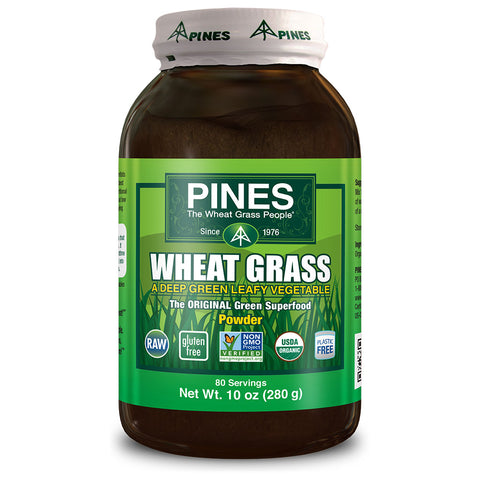
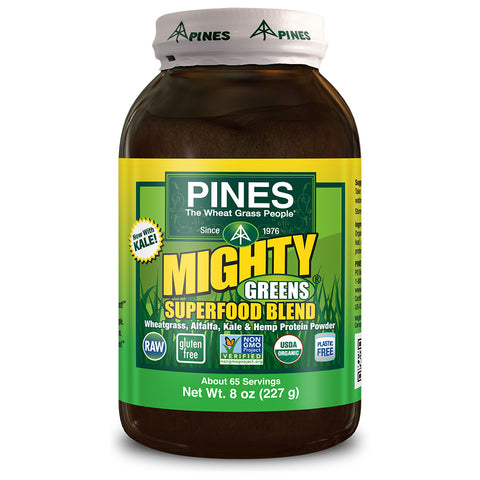
The cellulose story isn't just theoretical for Pines - it shows up in the lab numbers. Across many harvest lots of Pines cereal grasses (wheat, barley, and alfalfa), internal testing shows very high total dietary fiber per 100 g, with a large share as insoluble fiber. For example:
- Multiple barley grass lots show total dietary fiber values in the 30s to 50s g per 100 g, with documented insoluble fiber values in the low- to mid-teens for certain lots.
- Alfalfa and wheat grass lots similarly cluster around averages near 30 g or more total dietary fiber per 100 g, again with most of that as insoluble fiber.
When you combine these lab results with published food-science data showing that roughly 25-45% of insoluble fiber in plant foods is cellulose, it's clear that Pines greens deliver a natural, cellulose-rich fiber matrix similar to what you'd get from a mix of vegetables, fruits, and grains. The fiber in our bottles isn't an additive; it's the intact plant structure concentrated and preserved.
Whole food vs. "no-cellulose" powders: what's really being removed?
Some products promote themselves by highlighting what they *don't* contain - especially cellulose. It sounds reassuring, until you remember that cellulose is simply the main insoluble fiber in real plants. Removing it doesn't make a product more advanced; it makes it less like actual food.
Juice-style powders and certain low-fiber formulations remove the insoluble fiber matrix, including cellulose, during processing. What's left may still have some nutrients, but it no longer behaves like a whole food in your digestive system. You lose bulk, roughage, and much of the physical structure that supports a healthy gut environment and stable energy.
This is especially important in the context of the "fiber gap": most Americans get far less than the recommended amount of fiber, particularly insoluble fiber. From a public-health standpoint, removing cellulose moves people in the wrong direction. A whole-food greens product that keeps cellulose intact aligns with what nutrition experts have been encouraging for years: more fiber from real plants, not less.
How cellulose-rich greens support steadier energy
Energy is where this often becomes real for busy women juggling careers, families, and their own self-care. It's very easy to chase quick fixes - another coffee, another energy drink, another shot. But stimulant-based energy is short-lived and often comes with downsides: jitters, anxiety, and sleep disruption.
When you bring cellulose-rich greens into your daily routine, you're supporting a more foundational kind of vitality:
- Better regularity and gut function can translate into feeling lighter and less sluggish.
- A healthier gut environment supports how you extract and use nutrients from the rest of your diet.
- Fiber's impact on satiety and blood sugar helps reduce the sharp peaks and crashes that leave you drained by mid-afternoon.
Instead of swapping one stimulant for another, you're upgrading the *base layer* - the way your digestion, microbiome, and metabolism function day in and day out. And you can do it in realistic ways that fit a full life: a morning smoothie with Pines, a mid-day green drink instead of a second energy drink, or tablets with water when you're on the go.
Why keeping cellulose intact is a sign of integrity
For whole-food brands, cellulose isn't something to apologize for - it's something to protect. It tells you that what's in the bottle still resembles what grew in the field. When lab tests show robust total fiber and insoluble fiber across harvest lots, that's evidence you're getting meaningful plant structure, not just a dusting of isolated actives.
So, the next time you hear that "indigestible cellulose has no value," you can translate it: what's really being dismissed is the very fiber that makes vegetables, fruits, grains, and nuts so powerful for long-term health. Your body doesn't need less of that. It needs more - delivered in forms that respect how plants are built and how your gut is designed to use them.
At Pines, that's exactly why we keep the cellulose-rich fiber matrix intact in our field-grown cereal grasses: because we believe your greens should look more like real food, and less like whatever just survived a marketing meeting.



Comments (0)
There are no comments for this article. Be the first one to leave a message!