

Valentine's Day invites us to think about love—but often in ways that are fleeting and surface-level: chocolate, flowers, one romantic dinner. Those gestures are lovely, but they fade by February 15th. Real love, the kind that matters, is the daily decision to care for yourself and the people you care about in ways that compound over time.
And one of the most authentic ways to show love—to yourself and to those around you—is to take care of your cardiovascular health.
The truth about heart health and self-love
Your heart literally keeps you alive. It's the most essential organ in your body, beating 100,000 times a day, never asking for recognition or a day off. And yet, when we think about "treating ourselves" or "self-care," we often reach for things that work against our heart's health: stress, processed foods, sedentary routines, inadequate sleep.
Real self-love means being honest about what your heart actually needs, and then following through on providing it—not because it's trendy or because someone told you to, but because you recognize that your long-term health matters more than short-term convenience.
Leafy greens are one of the most powerful tools for heart health that nature provides. And unlike chocolate or flowers, they deliver lasting benefits.
What leafy greens actually do for your heart
The cardiovascular benefits of greens are well-documented, and they work through multiple pathways:
- Potassium: Leafy greens are rich in potassium, a mineral that helps regulate blood pressure by counteracting sodium and supporting healthy vascular function. A diet high in potassium from plant sources is associated with lower blood pressure and reduced cardiovascular risk.
- Nitrates: Many greens (especially arugula and other dark leafy varieties) contain natural nitrates that convert to nitric oxide in the body—a compound that helps blood vessels relax and dilate, improving blood flow and reducing pressure on artery walls.
- Antioxidants and phytonutrients: Greens are packed with compounds like lutein, zeaxanthin, and various polyphenols that help protect artery walls from oxidative stress and inflammation, two of the primary drivers of atherosclerosis and cardiovascular disease.
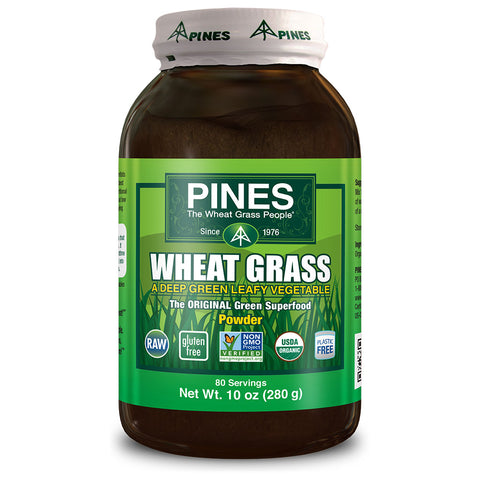
- Fiber: As we've discussed, insoluble fiber (including from cereal grasses like Pines) supports healthy cholesterol levels, healthy blood sugar, and overall metabolic health—all critical for heart function.
Together, these compounds create a multi-system support for cardiovascular health. It's not one "magic ingredient"—it's the complexity of the whole plant doing what evolution designed it to do: support human health.
Making it part of your daily rhythm
The challenge isn't understanding that greens are good for your heart. Most people know that. The challenge is integrating them into a life that's already full—work, family, stress, competing priorities.
This is where greens-as-daily-habit becomes so powerful. Unlike a Valentine's Day gesture, which is meaningful but temporary, daily greens become woven into the fabric of how you live. They require minimal time, minimal decision-making, and they work in the background of your day, supporting your cardiovascular health every single day of the year.
Here are some realistic ways to build daily greens into your actual life:
- Morning smoothie: Add Pines powder to your usual smoothie base (frozen fruit, liquid, protein source). Takes 90 seconds more than your regular smoothie, zero additional complexity.
- Mid-morning drink: Mix tablets or powder into water at your desk while you're checking email. No preparation, no cleanup beyond rinsing a glass.
- Lunch salad: If salads are already part of your rotation, double down on the greens, then add a Pines powder to a dressing or to water alongside the meal.
- Afternoon shot: When the 3 PM energy dip hits and you'd normally reach for coffee (which, fine, grab the coffee), add a glass of Pines to that habit stack.
The goal isn't perfection. It's consistency. And consistency is easiest when you integrate greens into rituals you already practice, rather than adding a completely new task to your day.
Heart-healthy Valentine's Day gifts (that actually last)
If you're looking for a meaningful gift this Valentine's Day—for a partner, a parent, a friend, or yourself—consider something that says: I want you healthy for the long term.
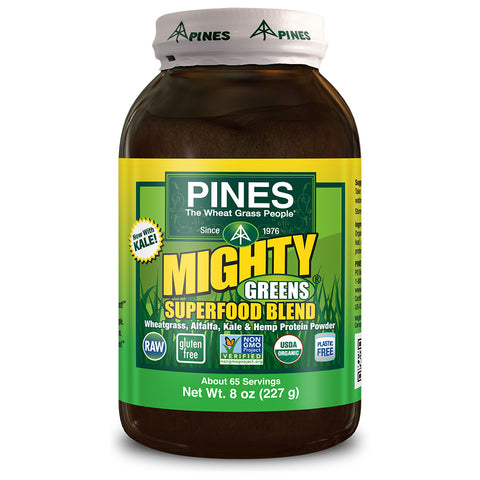
A bundle of Pines greens with a note like: "Here's to your heart—the organ that keeps you alive and the person who keeps my life meaningful. Let's take care of both together."
Or: "This isn't chocolates (those are fine too). This is a commitment to being here for as long as possible, together, and to supporting your body in the way it deserves."
Or, if it's for yourself: "This month, I'm choosing my heart. Because I matter."
These gifts have a different energy than the traditional Valentine's offerings. They're not about indulgence—they're about respect. Respect for yourself. Respect for the people you love. Respect for the fact that the best love stories are the long ones.
The practice of daily care
There's a reason that heart disease is the leading cause of death in developed nations: we don't practice prevention. We don't integrate the simple, daily habits that keep our hearts strong. Instead, we wait until there's a problem, and then we're limited in what we can do.
But you don't have to be part of that pattern. You can choose, starting now, to make daily cardiovascular support a non-negotiable part of how you live. Not because you're trying to earn something. Not because you're being good. But because your heart deserves care, and you deserve to be here, healthy and alive, for as long as possible.
That's what real love looks like: the daily decision. The repeated choice. The habit that doesn't make headlines but changes everything.
And it starts with something as simple as a scoop of greens.



Comments (0)
There are no comments for this article. Be the first one to leave a message!