

Walk into any kitchen on a school morning and you’ll see the great breakfast debate in action: smoothie or juice? Both look healthy. Both come in a glass. Both can include fruits and veggies.
But here’s the truth: they’re not the same thing. Not even close.
When you juice a fruit or vegetable, you strip away the fiber. When you blend it, you keep the whole food intact — fiber and all. And that difference matters more than you might think, especially for growing kids heading back to school.
The Fiber Factor: What Juice Leaves Behind
Fiber is the unsung hero of whole foods. It’s what makes a vegetable prebiotic — meaning it feeds the friendly bacteria (probiotics) in your digestive system. Without fiber, juice passes through your body too quickly to nourish those bacteria.
Dr. David Reuben highlighted this back in 1975 in his book The Save Your Life Diet. He studied cultures that ate whole foods — vegetables, fruits, nuts, and grains — and found that the fiber in those foods played a key role in digestive health. His message was simple: whole foods, not juices, are what our bodies are designed to process.
More recent research supports the importance of fiber in digestive health, suggesting that whole foods with intact fiber support a healthier gut environment than extracted juices.
In other words: the fiber isn’t just “extra.” It’s essential.
Why Smoothies Come Out on Top
Here’s what a whole-food smoothie gives you that juice can’t:
· Fiber intact: The whole vegetable or fruit is blended, not extracted. That means all the natural fiber stays in your glass.
· Prebiotic power: Because the fiber is still there, smoothies support the growth of probiotic bacteria in your digestive tract.
· Sustained energy: Fiber slows down how quickly your body absorbs sugars from fruit. That means no blood sugar spike and crash — just steady, lasting energy. Perfect for a school morning.
· More nutrition per glass: You’re getting the whole food, not just the liquid extracted from it.
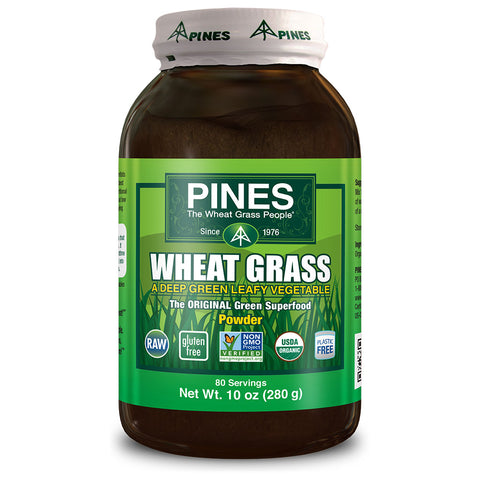
Add a teaspoon of Pines Wheat Grass powder to your smoothie, and you’ve added the nutrition of a full serving of dark green leafy vegetables — with all its fiber and chlorophyll intact. Pines is a whole food, not a juice.
The USDA Agrees: Whole Foods Over Juice
The USDA’s MyPlate guidance recommends that vegetables should be mostly whole foods, not juice. The CDC research behind MyPlate found that 9 out of 10 Americans aren’t eating enough vegetables and fruits to support their health. When your family is already falling short, choosing whole-food smoothies over juices helps you get more nutrition into every glass.
Kid-Friendly Smoothie Templates for Back-to-School Mornings
You don’t need a recipe — you need a formula. Here are three templates you can customize based on what’s in your fridge:
Template 1: The Classic Green
· 1 banana (frozen = creamier)
· 1 cup milk or plant milk
· 1 cup frozen fruit (berries, mango, or pineapple)
· Pines Wheat Grass powder (follow package directions for serving size)
· Optional: 1 tablespoon nut butter for extra staying power
Template 2: The Tropical Hide
· 1 cup pineapple chunks (frozen)
· 1 banana
· 1 cup coconut water or orange juice
· Pines Wheat Grass powder (follow package directions for serving size)
· Optional: handful of spinach for an extra green boost
Template 3: The Berry Boost
· 1 cup mixed frozen berries
· 1 cup Greek yogurt
· 1/2 cup milk or plant milk
· Pines Wheat Grass powder (follow package directions for serving size)
· Optional: 1 tablespoon honey or maple syrup
Each template takes less than three minutes to make. Each includes a full serving of veggies from the Pines Wheat Grass. And each one keeps the fiber that juices throw away.
Why Pines Is a Whole Food, Not a Juice
Pines Wheat Grass is grown outdoors in the glacial soils of northeastern Kansas, through nearly 200 days of slow winter growth. It’s harvested once a year at the “jointing stage” — the brief window when nutrient density peaks. Then it’s dried at low temperatures and milled into powder, or pressed into tablets.
No juice extraction. No fiber removal. The whole plant stays intact.
That’s what makes Pines prebiotic. The natural vegetable fiber is still there, ready to support the friendly bacteria in your digestive system. A rounded teaspoon of powder or seven tablets gives you the nutrition of a serving of spinach or kale — for less than 50 cents a serving.
Make the Switch This School Year
If your family has been reaching for juice, this is the perfect time to switch to smoothies. Back-to-school season is all about building better routines. A whole-food smoothie with Pines Wheat Grass takes three minutes, costs less than a dollar, and delivers more nutrition than any juice ever could.
Your blender is the most powerful tool in your kitchen. Use it.
Ready to upgrade your morning routine? Shop Pines Wheat Grass and start blending whole foods today.



Comments (0)
There are no comments for this article. Be the first one to leave a message!