

Everywhere you turn this summer, there’s a new “miracle” green shot or cleanse promising instant energy, detox, or glow. Wheatgrass is often at the center of those claims—and just as often at the center of a lot of confusion. Is it only for hardcore wellness folks? Is it the same as that tray at the juice bar? Is it actually gluten‑free? And do you really have to choke down a tiny shot to get the benefits?
At Pines, we’ve spent decades with wheatgrass and cereal grasses and are still growing on the same Kansas farm that started the research back in 1932. That means we’ve heard every myth in the book—and we’ve seen what the science actually shows. Let’s bust a few big summer myths so you can enjoy your greens with more confidence and less hype.
Myth #1: “Wheatgrass is just for cows”
You’ve probably heard someone joke, “Only cows eat grass.” It’s a funny line—but it’s also one of the biggest myths. Wheatgrass is not lawn clippings; it’s the young, nutrient‑dense leafy stage of the wheat plant, harvested before it ever produces grain. At this stage, it’s packed with chlorophyll, vitamins, minerals, and phytonutrients, making it more like a leafy green vegetable than animal feed.
Back in the 1930s, farm research found that animals fed cereal grass at this leafy stage were healthier and produced more eggs and milk than animals without it. That caught the attention of scientists and the medical community, and cereal‑grass supplements became an early “green superfood” long before that term was trendy. Today, modern nutrition science still points to dark green vegetables—like wheatgrass—as core foods for human health.
Takeaway: Wheatgrass belongs on your plate (or in your glass) as a concentrated form of leafy green nutrition, not in the pasture punchline category.
Myth #2: “Tray‑grown shots = true wheatgrass”
If your only experience with wheatgrass is a tiny, bitter juice bar shot from a plastic tray, it’s easy to assume that’s what all wheatgrass is. But how and where wheatgrass is grown makes a massive difference.
Tray‑grown wheatgrass is usually seeded indoors, watered heavily, and harvested just days later. The roots sit in a thin layer of soil or fiber, and the grass often grows in humid, stagnant air. That fast, shallow growth can create conditions for mold and doesn’t allow the plant to develop the deep nutrient density it gets from months of outdoor growth in real soil.
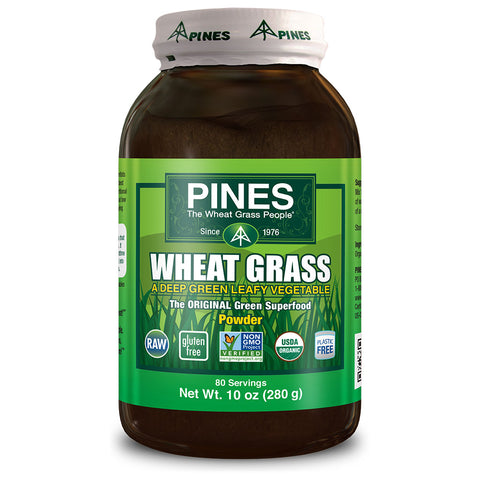
Field‑grown wheatgrass—like Pines—spends close to 200 days outdoors, rooted deeply in glacial soils, exposed to full seasons, and allowed to reach a specific growth milestone called the jointing stage. At jointing, the plant’s nutrient levels peak in a short window of just a few days, and that’s when it’s harvested, dried at low temperatures, and concentrated into powder or tablets.
Takeaway: Not all wheatgrass is equal. Seven days in a tray and 200 days in the fields produce very different products, even if they share the same name.
Myth #3: “Wheatgrass isn’t gluten‑free”
Because wheatgrass comes from the wheat plant, many people assume it must contain gluten. In reality, gluten is a protein found in the grain (the seed), not in the young green leaves. When wheatgrass is harvested before the plant forms a head of grain, those gluten‑containing structures haven't developed.
For products like Pines wheatgrass, the fields are carefully managed so no mature heads of wheat form in the crop, and the harvest is timed to stay in the leafy, pre‑grain stage. On top of that, batches are tested to verify they’re gluten‑free, and the entire supply chain is controlled to avoid contamination.
If you’re celiac or highly sensitive, it’s still important to choose brands that can show testing and controls—but wheatgrass itself, properly grown and harvested, is naturally gluten‑free*.
Takeaway: Don’t let the word “wheat” scare you. Wheatgrass (the leafy green) is different from wheat (the grain), and the former can be safely gluten‑free when produced correctly.
Myth #4: “You only get benefits from juice”
Juice cleanses and shots might look dramatic, but there’s a quiet hero missing from that picture: fiber. When wheatgrass or other greens are juiced, the insoluble fiber is usually removed. That might make the drink smoother, but it also strips away one of the most important components for gut and overall health.
In whole‑leaf cereal grass powders and tablets, the plant’s natural fiber stays intact. That fiber acts like a prebiotic, feeding the beneficial bacteria in your microbiome move waste through the colon. It supports satiety, smooth digestion, and steady blood sugar far better than juice alone.
Research on whole‑food diets consistently shows that fiber‑rich vegetables are linked with better gut health, cardiovascular health, and long‑term wellness. So while juice might have some vitamins, it’s missing the structural parts of the plant that help those nutrients work in your body day after day.
Takeaway: If you’re chasing gut health, stable energy, or long‑term wellness, whole‑leaf greens with fiber will serve you much better than juice‑only approaches.
Myth #5: “Summer wheatgrass = instant detox”
Around holidays like July 4, “detox” messaging spikes: take a shot after the barbecue and magically erase everything you ate. That’s another myth worth retiring. True detox in the body isn’t a one‑time event; it’s an ongoing process handled by your liver, kidneys, colon, skin, and lungs. They rely on steady, daily intake of nutrients—especially fiber‑rich greens—to function well.
Dark green foods like wheatgrass support this natural detox by providing chlorophyll, antioxidants, minerals, and fiber that help bind and move waste out through normal channels. But it’s consistency that matters. A single “detox” day can’t replace months of habits, and no one ingredient overrides the basics of sleep, hydration, and regular movement.
Takeaway: Think of wheatgrass as part of your everyday “clean inside” routine, not a crash‑course detox. A serving most days will do far more for your summer wellness than an occasional extreme cleanse.
How to make wheatgrass work for you this summer
- Add it to water in the morning for a simple daily greens ritual
- Blend it into a smoothie instead of relying on juice bar shots
- Pack tablets in your bag for road trips and beach days
- Pair it with colorful veggies on your plate rather than chasing trends
When you understand the myths and the science, wheatgrass becomes less of a mysterious shot and more of a familiar, reliable way to get concentrated leafy greens—without the summer hype.
*The FDA classifies foods gluten-free if they contain less than 20ppm of gluten.



Comments (1)
I was diagnosed with lupus very sick and a couple at our church told me about wheatgrass at that time we had to juice it. I bought a juicer and started juicing. That was severe years ago I still to this day I take my wheatgrass one pill a day . I am thankful for the pill form because it not good tasting, 1 pill a day that’s it. What a life saver. I do not ever get sick anymore.I will take wheatgrass my whole life.thank you wheatgrass I have a life never sick.